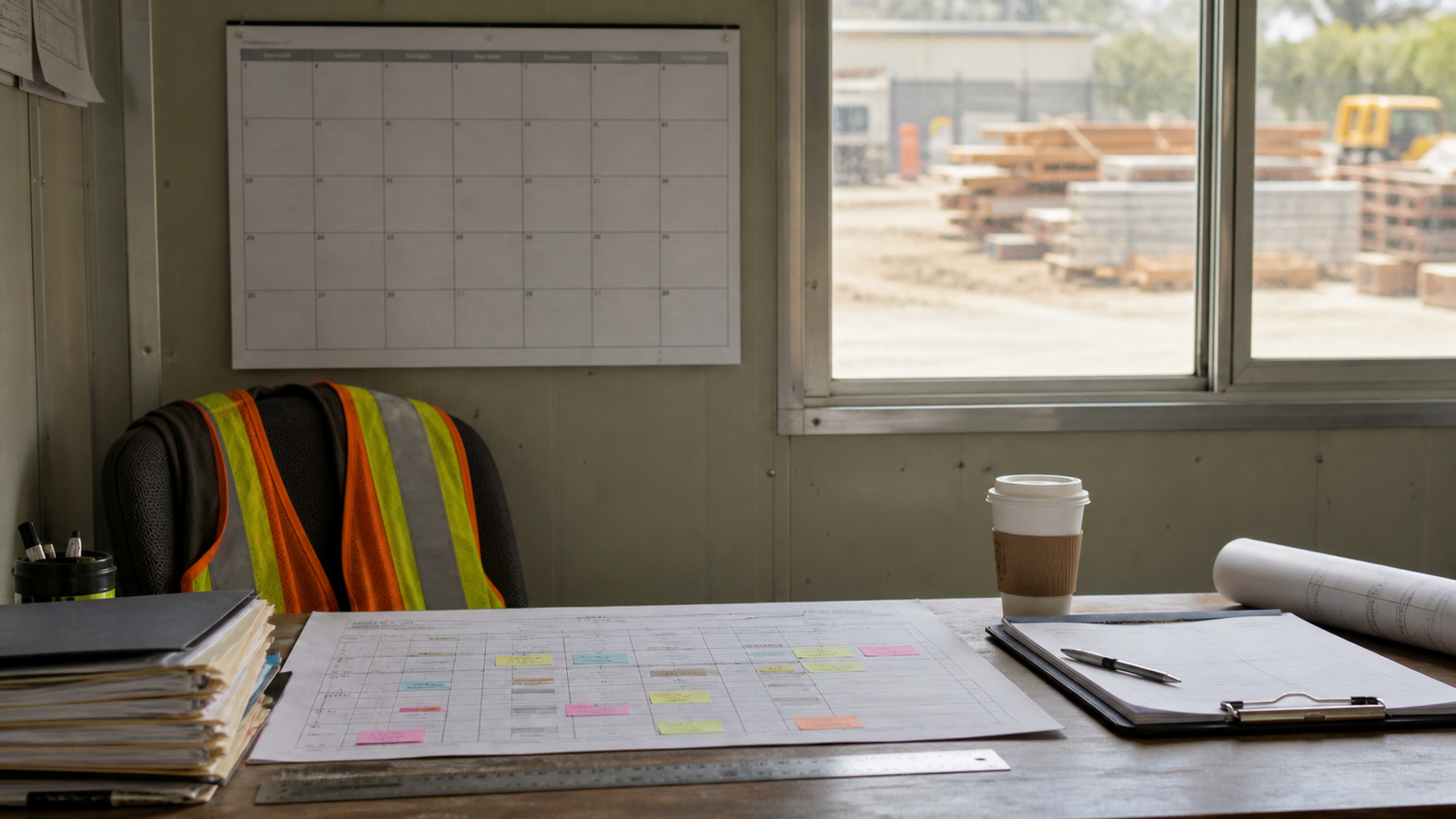
Experience records are easiest to build before you need them. Once licensing feels urgent, dates blur, supervisors move, job descriptions become too general, and the difference between helping, performing, and supervising can be hard to explain.
A good record habit does not require a legal conclusion. It only needs to preserve facts while they are fresh: where you worked, what you did, who supervised the work, what changed in your responsibility, and which parts of the trade remain thin.
Start while the work is ordinary
Do not wait for a license application to begin tracking experience. The ordinary week contains the most useful details. You know which tasks repeated, which ones were new, which decisions you made independently, and which work still required close supervision.
The official California experience guidance is the place to verify current requirements and terminology. Use the contractor license experience page as a reference point, but keep your own notes factual rather than trying to force them into application language too early.
Earlier notes are easier to verify and less likely to blur.
- Same week95
- Same month75
- Same year45
- After a job change25
Separate exposure from responsibility
Seeing a task is not the same as performing it. Performing a task is not the same as planning, checking, or leading it. Your records should keep those levels separate. That honesty helps you find gaps before they become expensive assumptions.
For example, helping with layout once does not prove layout judgment. Repeating prep work under supervision can be valuable, but it should not be described as full responsibility. Clear notes are more useful than inflated notes because they show what to learn next.
Track the person who could explain the work
A record without supervision context is weak. Write down who assigned the work, who checked it, who corrected mistakes, and who could explain your role if needed later. If the person changes, note the transition. If the company changes, preserve the old context before it disappears.
The goal is not to collect private information carelessly. The goal is to avoid a vague memory of “I did remodeling for a while” when you later need to understand what experience the work actually supports.
- Dates and approximate hours are recorded while fresh.
- Supervisor or qualifying person is named with contact context.
- Tasks are described by actual work, not only trade labels.
- Scope gaps are noted instead of hidden.
- Safety or code-related learning is separated from routine labor.
Review gaps before choosing a path
Once a month, read your notes as if you were advising someone else. Which tasks are repeated enough to show real skill? Which parts are still only exposure? Which scope questions keep appearing? Which trade direction now looks stronger or weaker than it did a month earlier?
This review may change the next step. You may need a different helper role, a more structured training route, or a narrower trade target. That is a good outcome. It means the records are guiding decisions instead of sitting in a folder.
Keep the record boring and specific
The best notes are not dramatic. They name dates, tasks, tools, settings, supervisors, and uncertainties. They avoid exaggeration. They make it easier to decide whether the next move should be more field time, scope research, business learning, or exam preparation.
When the license path becomes serious, you will still need to verify official instructions. But you will not be starting from memory alone.
Keep examples, not only categories
Categories such as framing, service, remodel, or installation are too broad by themselves. Add examples that show the task level: what was prepared, what was measured, what was installed, what was checked, and what correction happened afterward. Concrete examples make later review more reliable.
A short weekly note can be enough. Write three bullets: one repeated task, one new responsibility, and one gap. After several months, patterns will appear. You will see whether the path is adding depth, repeating the same basic labor, or pointing toward a different trade family.
Review the record with the future path in mind
- Record the task in ordinary language.
- Record who checked the result.
- Record what would make the next repetition stronger.
Do not review notes only as proof of time served. Review them as clues about direction. If the same tasks appear repeatedly without new responsibility, the route may need a stronger learning environment. If the notes show widening responsibility, the path may be producing the kind of evidence that later planning can use.
A record habit also reduces anxiety. Instead of guessing whether the work counts or whether you remember enough, you can see what has been documented and what still needs verification.
Keep the record format boring enough that you will actually use it. A complicated tracker fails if it is abandoned. A dated note with task, supervisor, setting, and gap is better than a perfect template filled out twice. Small records compound.