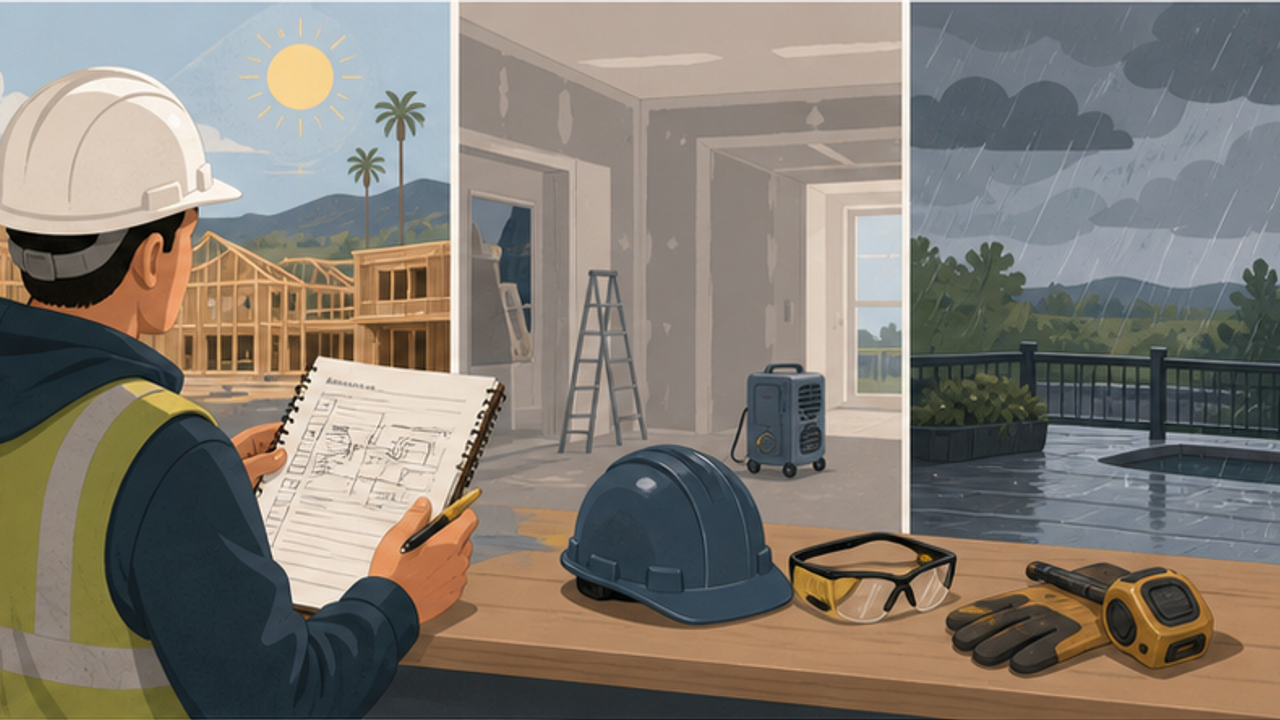
Outdoor construction work can look clear from a distance. The work is visible, physical and often easier to imagine than diagnostic service work or finish-detail work inside a home. That visibility can mislead a beginner. A path can look appealing because the result is tangible while the daily routine is shaped by heat, access, weather, loading, cleanup, sequencing and equipment limits.
The better first question is not whether outdoor work seems interesting. It is whether the repeated setting still makes sense after the novelty is gone. Landscaping, roofing, concrete, grading, pools, paving, tree work and exterior repair do not feel the same just because they happen outside. Some routes are paced by weather windows. Some are paced by material timing. Some depend on vehicle access, disposal, measuring, soil conditions or safety supervision before a beginner can do meaningful work.
Separate the setting from the trade name
A trade name says too little about the day. Landscaping may include planting, irrigation, grading, hardscape, maintenance, client walkthroughs and seasonal cleanup. Concrete work can include layout, forming, pouring, finishing, curing and demolition. Roofing can involve access, staging, tear-off, waterproofing detail and weather pressure. A beginner choosing from titles alone may miss the difference between a task that is tiring but satisfying and a task that becomes unsustainable.
Create an observation note for each route. Write where the work happens, what the body does repeatedly, what tools or equipment are close by, how weather changes the plan and who corrects mistakes. The note should be plain enough that a working contractor could disagree with it. If the note is too vague for disagreement, the trade has not been observed closely enough.
Swipe horizontally to view all columns.
| Signal | What to observe | Risk if ignored |
|---|---|---|
| Weather window | Heat, rain, wind, drying time and daylight constraints. | A pleasant setting becomes schedule pressure. |
| Terrain and access | Slope, roof access, soil, hauling distance and staging space. | The work feels different from the finished result. |
| Equipment footprint | Vehicle, storage, rental, disposal and setup requirements. | Startup cost arrives before trade fit is proven. |
Weather is not just discomfort
Heat, rain, dust and wind change quality, safety and scheduling. A person who likes being outdoors may still struggle when work must happen in protective gear, on a hot surface, with material setting time or with a crew waiting for the next step. Cal/OSHA publishes heat illness prevention information because heat exposure is a work-planning issue, not merely a personal preference.
Do not use one comfortable day as evidence. Ask what the path looks like during a rushed week, a delayed delivery, a hot afternoon or a cleanup-heavy job. Outdoor fit is partly about the body, partly about attention and partly about whether the entry route teaches safe habits before speed becomes the only measure.
Equipment can choose the route for you
Some outdoor paths require a heavier startup footprint than a beginner expects. Vehicle access, trailers, storage, dump runs, compactors, ladders, pumps, generators and specialty tools can become real constraints. Even before licensing, the first job or training route may require transportation, schedule flexibility and willingness to handle dirty or repetitive support tasks.
This is why outdoor trade choice should be paired with budget thinking. A path that needs expensive equipment early may still be right, but it should be tested with helper work, supervised exposure or staged learning before major purchases. A path with lower early tool pressure may let the reader collect evidence faster.
Watch the weak signals
Weak signals are not failures. They are clues that the route needs more observation. A beginner who only likes finished outdoor projects may dislike staging, hauling or cleanup. Someone who likes physical work may dislike changing plans because of access or weather. Someone who likes independence may struggle with crew timing, safety correction or customer-visible mess.
A practical field-note standard
Before choosing an outdoor path, write three notes: one task you can repeat, one condition that worries you and one first route that would expose you to the work safely. The first route might be a helper job, a formal program, a short class, or conversations with working contractors. The exact route matters less than the evidence it produces.
A strong outdoor choice has a real setting, a tolerable pace, a believable first step and a budget path that can be staged. A weak choice depends mostly on the look of finished work or the appeal of being outside. Keep the decision narrow until field evidence supports it.
The final check is whether the reader can describe the work without using only attractive nouns. A useful description might say that the route involves early starts, loading, surface preparation, weather delays, cleanup and careful staging before the visible result appears. That kind of sentence is more useful than a title because it names what a beginner must actually tolerate. If the description still sounds acceptable, the path deserves one more round of observation. If the description makes the work feel wrong, that is useful information before money is spent.