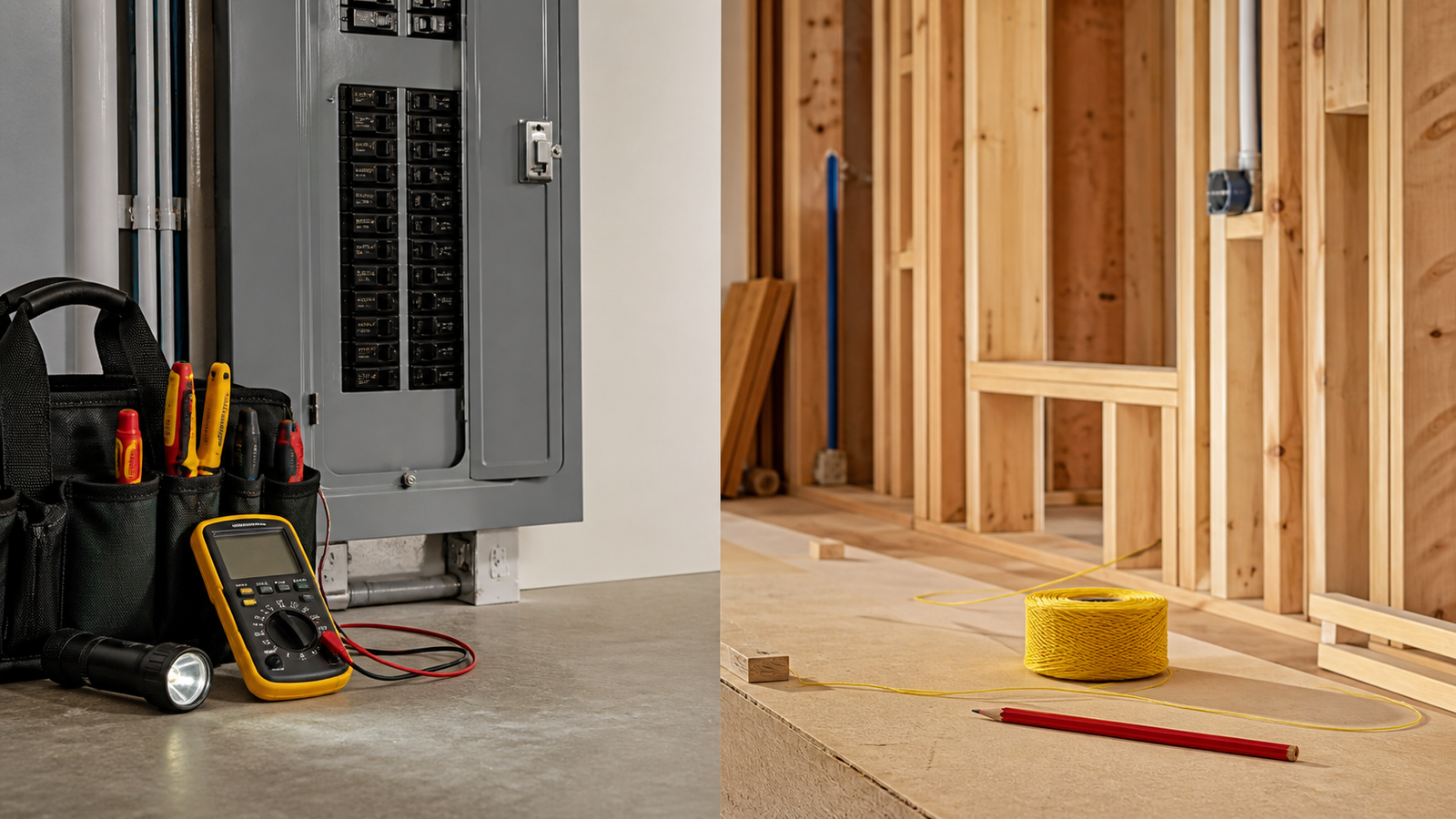
Two people can choose the same trade family and experience very different careers. One may spend the day diagnosing short service calls. Another may work through longer project sequences with staging, coordination, and finish deadlines. The trade label is only part of the decision.
Rhythm matters because it changes how stress arrives. Some people recover quickly from urgent diagnostic work. Others prefer longer sequences where progress is visible and problems can be planned.
Service work rewards fast narrowing
Service work often begins with incomplete information. The customer describes a symptom, the system behaves differently than expected, and the worker has to narrow the cause without wasting time. That can be satisfying for someone who likes puzzles and direct feedback.
The same rhythm can exhaust someone who dislikes interruption, customer explanation, or uncertainty. A successful service worker may need technical curiosity and communication tolerance in the same hour.
Two rhythms that change the same trade
A trade family can include both service calls and longer job sequences. Compare the rhythm before choosing.
| Signal | Service rhythm | Project rhythm |
|---|---|---|
| Feedback | Fast, often from the customer or failed system behavior. | Slower, often from sequence, inspection, or final quality. |
| Planning | Diagnosis and prioritization under incomplete information. | Material, schedule, crew, and scope coordination. |
| Stress | Urgency, callbacks, communication, and unknown conditions. | Delays, handoffs, finish standards, and project dependencies. |
Longer jobs reward sequence awareness
Longer jobs usually give more visible structure, but that does not make them easier. Materials, access, other trades, inspections, rework, and finish expectations can all affect the outcome. The pressure may build more slowly, then become expensive when sequence decisions were weak.
This path can fit someone who likes planning, repetition, and visible progress. It can frustrate someone who wants each day to resolve quickly.
Systems trades need extra rhythm checking
Electrical, HVAC, and plumbing paths can cross both rhythms. A reader leaning toward electrical work may eventually review a dedicated path such as C-10 electrical study prep, but only after deciding whether service diagnosis, project installation, or another systems-work rhythm is the better fit.
Higher score means the pressure usually appears earlier in the job.
- Urgency85
- Customer explanation78
- Crew coordination62
- Finish sequencing55
Watch how you recover from pressure
The useful signal is not whether a day is stressful. Every trade has stress. The signal is how quickly you recover and whether the stress makes you more attentive or more careless. Urgent calls may sharpen one person and drain another. Long projects may steady one person and bore another.
Observe one job in each rhythm
Before choosing, compare one service-like setting and one project-like setting. Read job descriptions, talk to workers, or observe how the day is organized. Look for who sets priorities, how mistakes appear, how customers are handled, and whether the work feels better when it is short and diagnostic or longer and sequenced.
The answer does not have to be final. It only needs to narrow the next route: service exposure, project exposure, or a trade family where both rhythms remain possible.
Use recovery as a practical signal
Recovery is easier to observe than motivation. After a service-style day, do you want to understand the next problem, or do you feel scattered and defensive? After longer scheduled work, do you notice sequence improvements, or do you feel trapped by slow progress? Those reactions say more than a general preference for hands-on work.
Try to compare the same trade family across both rhythms when possible. A systems path, for example, may include urgent calls and planned installs. Seeing both versions keeps you from rejecting the trade when the real mismatch is only the rhythm.
Avoid judging from one good task
A single satisfying task can mislead. You may enjoy diagnosing a problem once but dislike the pressure when calls stack up. You may enjoy a project milestone but dislike the waiting, staging, and rework around it. Look for the repeating pattern around the task, not only the task itself.
The best rhythm choice gives you enough friction to learn without making your attention worse. That is why observation should include slow hours, cleanup, communication, and correction, not only the most interesting work.
If the rhythm still feels close after observation, choose the route with better supervision first. Strong feedback can reveal whether the rhythm fits. Weak feedback can make either rhythm look worse than it really is.
If a path still feels unclear, ask someone in the field which rhythm creates the most turnover among beginners. The answer may reveal the pressure that job ads and course pages usually leave out.
Compare scheduling, not only tasks
The calendar can change the career as much as the tool belt. Service work may involve scattered calls, urgent requests, and a need to reset attention several times. Scheduled jobs may involve longer dependencies, delays, and pressure to protect sequence. Both can be profitable or frustrating depending on how you handle time.
Ask how the rhythm affects your life outside the job. A path that looks interesting but constantly disrupts sleep, family logistics, or recovery may not be the best first commitment. A slower path that keeps attention steadier may produce better learning even if the tasks look less dramatic.