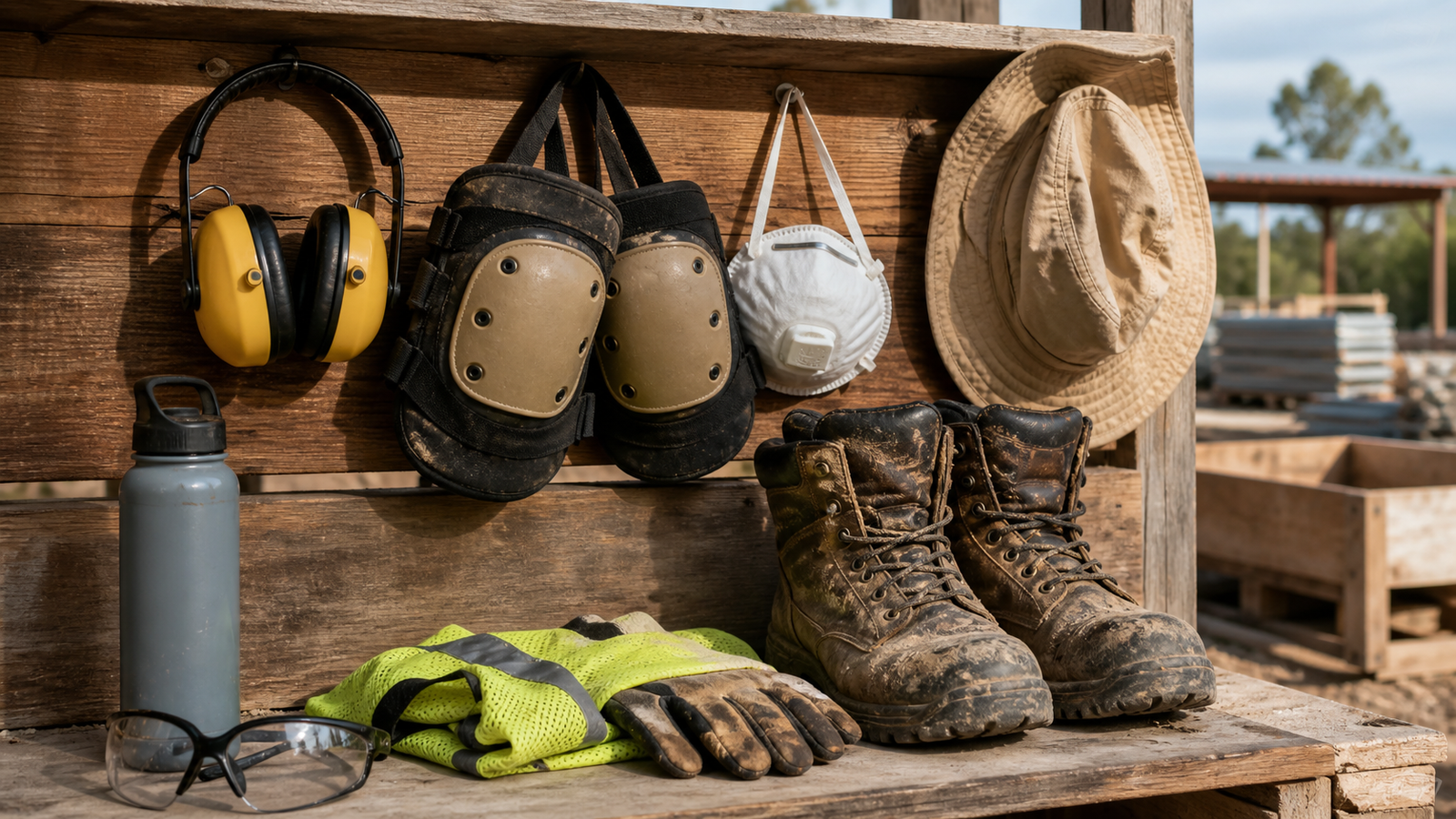
A construction trade can match your interests and still be wrong for your risk tolerance. Environment changes the work. Heat, dust, heights, customer proximity, noise, confined spaces, traffic, tools, and schedule pressure all affect whether the path is sustainable.
Risk fit is not about being fearless. It is about knowing which conditions make you careful, which conditions make you careless, and whether the entry route teaches safe habits.
Separate discomfort from hazard
Some discomfort is part of learning a trade. Hazard is different. If a task requires training, supervision, protective equipment, or a specific procedure, do not treat it as a personality challenge. The question is whether the path can teach safe practice, not whether you can ignore risk.
The OSHA construction topic library is a useful broad reference for common hazard areas: construction safety and health topics. Use it to sharpen questions for employers and training routes.
- Can you tolerate the setting for a full week, not one interesting day?
- Do you understand which hazards require training or supervision?
- Can you keep attention when the work is hot, noisy, cramped, or repetitive?
- Does customer proximity make you more careful or more distracted?
- Can the entry route teach safe habits consistently?
Scenario one: occupied-home pressure
Residential and remodeling work can put you close to the customer. That may mean more explanation, cleaner staging, and stronger finish expectations. If communication helps you focus, this environment may fit. If customer presence makes you rush or hide uncertainty, it may create problems.
Scenario two: outdoor and production pressure
Outdoor work can provide visible progress and a direct physical rhythm. It can also involve heat, weather changes, equipment movement, and schedule compression. The fit signal is whether exposure makes you attentive or simply worn down.
Swipe horizontally to view all columns.
| Environment | Common pressure | Fit signal |
|---|---|---|
| Occupied homes | Customer proximity, dust control, access limits. | You can communicate calmly while preserving work quality. |
| Outdoor production | Weather, staging, physical pace, equipment movement. | You recover well from exposure and visible production pressure. |
| Service settings | Urgency, diagnosis, incomplete information. | Uncertainty sharpens your thinking instead of scattering it. |
| System work | Code awareness, testing, consequences of hidden mistakes. | You like methodical checks and careful documentation. |
Scenario three: systems and hidden consequences
Electrical, HVAC, plumbing, low-voltage, and related system paths can involve mistakes that are not always visible immediately. The work may reward methodical checking, documentation, and respect for code or manufacturer requirements.
If a reader is specifically leaning toward energy-related outdoor systems and has already narrowed that direction, the next step may include reviewing a solar exam path such as a solar exam-prep path. Keep this kind of link tied to a defined trade interest, not general curiosity.
Test the environment before the title
Before choosing a trade, choose one environment to observe. Ask what conditions repeat in bad weather, busy seasons, tight spaces, customer homes, or urgent service calls. A title may still sound attractive, but the environment is what your body and attention will meet.
The best decision is not the least risky path. It is the path where risk is understood, training is real, and your behavior becomes more careful under pressure.
Do not confuse toughness with fit
A person can tolerate a hard environment and still choose poorly. Toughness helps, but fit also includes attention, judgment, and the ability to keep safe habits when the day becomes repetitive. The best environment is not the one you can survive once; it is the one where you can keep learning responsibly.
When comparing paths, ask how the environment changes your behavior. Do you slow down when conditions become risky, or do you rush? Do you ask better questions, or do you guess? That response is a career signal, not a character judgment.
Pick one condition to test next
Do not try to solve every environment question at once. Choose the condition that seems most likely to decide the path: heat, heights, dust, occupied homes, service urgency, confined areas, or repetitive physical work. Then find a safe way to observe that condition through job shadowing, conversations, postings, or training descriptions.
If the condition is a hard no, respect the signal. If it is uncomfortable but manageable with proper instruction, the path may still deserve another test.
The environment question should stay practical. If a setting requires training, protective habits, or supervision, treat that as part of the route evaluation. Do not separate safety culture from career fit.
Notice how crews talk about risk
Crew language signal
Crew language is part of the environment. Some crews talk about hazards clearly and correct each other early. Others minimize concerns until something goes wrong. A beginner should pay attention to that difference because it shapes habits before technical confidence is earned.
Also watch whether people explain why a practice matters. Rules that are only shouted may create compliance for a moment. Explanations build judgment. A trade path with real teaching around risk is different from one that expects beginners to guess quietly.
This is especially important when the work looks exciting from the outside. A dramatic setting can hide weak instruction. A calmer setting can still carry serious responsibility. The reader should compare how risk is managed, not just how the job looks.
When risk management is clear, the environment becomes easier to judge honestly. When it is unclear, pause before treating the path as a good fit.